
A European alternative to Slack
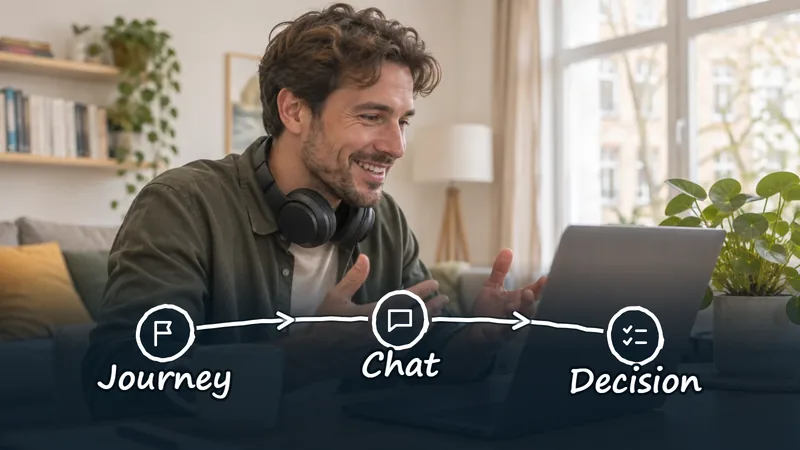
A European alternative to Slack is mostly interesting if you no longer want to use chat as a loose stream. In CoVince chat is part of a journey: the place of a project or team, with people, files, timeline and boards alongside. That way you talk in the same environment where the work is, and you use one European platform instead of a separate chat tool.
Chat where the work is
A familiar problem with standalone chat tools: decisions and files disappear in a stream. Anyone who was away for a week scrolls back through hundreds of messages to find one agreement. In CoVince the chat sits in a journey, next to the actions, the timeline and the documents. A conversation about an action therefore leads straight to that action.
What you get
- Chat per journey, with the people who belong there.
- Video calls without switching environment.
- Documents, grids and slides in own editors.
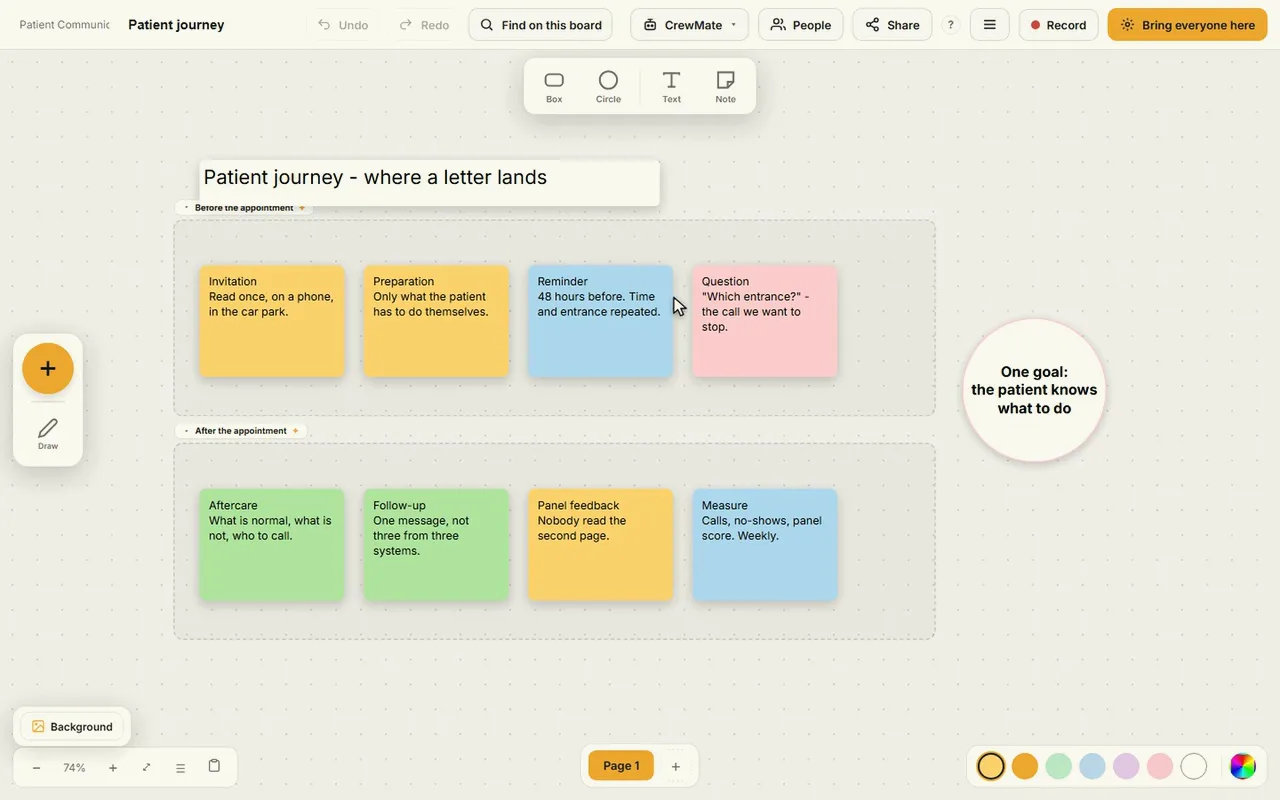
- A board with actions, owners and dates, so an agreement does not stay stuck in the chat.
- A CrewMate that can think along with the context of the journey.
Honest about what is different
CoVince is not an exact copy of Slack. If you use Slack mainly for many integrations with other services or for large communities of separate channels, first see in a demo what fits. We do not promise automatic import of your Slack history.
Why European
Slack belongs to a US company and falls under US jurisdiction, also for data in a European region. See the CLOUD Act and data residency is not sovereignty. CoVince runs in Europe, with a European cloud provider, and is ISO 27001 certified. That does not replace your own GDPR considerations: a processing agreement and good access rules remain your job. See the main page.
Agreements that make chat better
A different platform does not fix a poor chat culture by itself. Moving is the moment to make agreements that work in any tool. Three agreements that give quick results:
- One journey per project or team, not per topic of the day.
- A decision belongs on the board as an action or agreement, not only in the chat.
- Ask questions in the journey where the answer belongs, so new colleagues can read along.
An example: a design agency of twenty-five people
Suppose a design agency with twenty-five employees that works for municipalities and schools. In the current chat tool there are more than sixty channels, half of which are dormant. Client agreements sit in private messages, and when a designer goes on holiday, the replacement needs an afternoon to catch up.
The agency starts with the newest assignment: a new visual identity for a primary school. There is one journey with the project lead, two designers and the head teacher as a guest. The feedback rounds take place in the chat, the decisions go on the board as an action with a date, and the design files and quotes sit in the journey. When the project lead is out for a week, the replacement opens the board and sees in five minutes what is open. After the assignment the next client gets a new journey, and the old one stays available as an archive.
Switching in three steps
- Pick one team and put its chat in a journey.
- Move the action list and the standing meetings along.
- Let the old channel run dry as soon as the team feels at home.
Calm in your notifications
Many teams drop out of chat because it constantly pings. Agree what is urgent, and let the rest wait until the stand-up. A platform that combines chat and actions makes that easier: what is recorded on the board does not need to be repeated in the chat. Also decide per journey who gets notifications and who just reads along.
Checklist for the switch
- Which channels were really used in the past month? Only those move along.
- Which integrations with other services does the team use daily, and what is the alternative?
- Who owns the trial and who manages access?
- Which external guests must come along, and to which journey do they get access?
- When do you set the old channel to read-only?
Common mistakes
The most common misunderstanding is that a new platform brings calm by itself. Anyone who copies the same sixty channels one to one gets the same noise in a different place. A second mistake is closing the old channel too early, so people fall back on private messages. A third is making no agreement on response time: chat feels urgent, but rarely is.
Finding back what was discussed
A chat is only useful if you can later find what was agreed. That is why it helps to end a conversation with a sentence that starts with "Decided:" and to put it straight on the board as an action, with owner and date. That gives you two entrances to the same agreement: the chat for the context, the board for the status. New team members read the board first and the chat only after, which saves them a day of reading in.
What you do on Monday
Count the channels that were really used in the past month, pick one team and schedule a demo. Also read the article on an alternative to Teams and the choice between a platform and separate tools. Background on dependence is in what is digital sovereignty.
Frequently asked questions
Is there a European alternative to Slack?
CoVince offers chat per journey, together with video calls, documents and boards in one European platform.
Can I import my Slack history?
We do not promise automatic import. We discuss in a demo what is possible.
What if I use Slack mainly for integrations?
Then a trial with one team is extra important. CoVince focuses on collaboration in the journey and is not an integration platform for hundreds of services.
Where does CoVince run?
In Europe, with a European cloud provider, without a US hyperscaler. CoVince is ISO 27001 certified.
How do I stop chat becoming a stream again?
Record decisions as an action on the board and use one journey per project. Then chat stays for discussion and not for archive.
Can an AI look along in the chat?
The CrewMate works in the context of the journey. An organisation admin chooses which model runs behind it.