
All-in-one platform or separate tools?
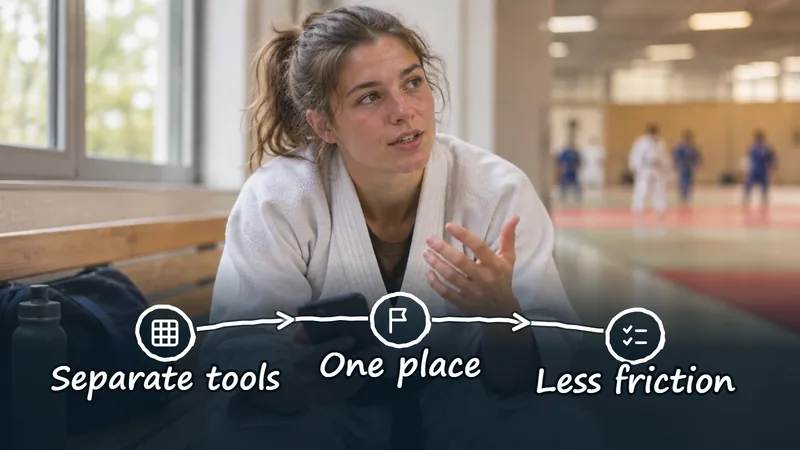
An all-in-one platform or separate tools: the choice depends on how sensitive your data is and how much specialism you need. An integrated platform reduces the number of suppliers, contracts and integrations and keeps context together. Separate tools are often stronger at one thing. This article helps you choose soberly, without becoming an advertisement for either.
Advantages of one platform
- Fewer suppliers: fewer contracts, fewer risks to assess, see NIS2.
- Context together: chat, actions, documents and boards sit with the same project.
- One access model: who sees what is managed in one place.
- Simpler exit: one track instead of five, see exit strategy.
Advantages of separate tools
- More depth per function, for example in specialist software.
- You can swap one part without moving everything.
- Existing knowledge and integrations remain usable.
A sober trade-off
| Question | Points to |
|---|---|
| A lot of sensitive data, small IT department | One platform |
| Teams that mainly chat, call and make documents together | One platform |
| Heavy specialist application (for example CAD) | Specialist tool, with a platform around it |
| Deep integrations with existing systems | Try first with one team |
Where CoVince fits
CoVince combines journeys, chat, video calls, own editors for documents, grids and slides, canvas, the Control Room and an AI CrewMate. It does not replace every specialist tool; it is meant for the collaboration core. Access is managed per organisation and journey. CoVince runs in Europe, with a European cloud provider, and is ISO 27001 certified. That does not relieve you of your own assessment: even with one platform your organisation remains responsible.
An example: an engineering firm with CAD
Suppose an engineering firm of fifty employees that designs bridges and quays. The designers work in heavy CAD software that is available nowhere else. Around it the firm uses five other tools: a chat tool, a meeting tool, a document wiki, a whiteboard and a separate action list. Each tool has its own contract, its own users and its own access, and for every departure the administrator has to check five places.
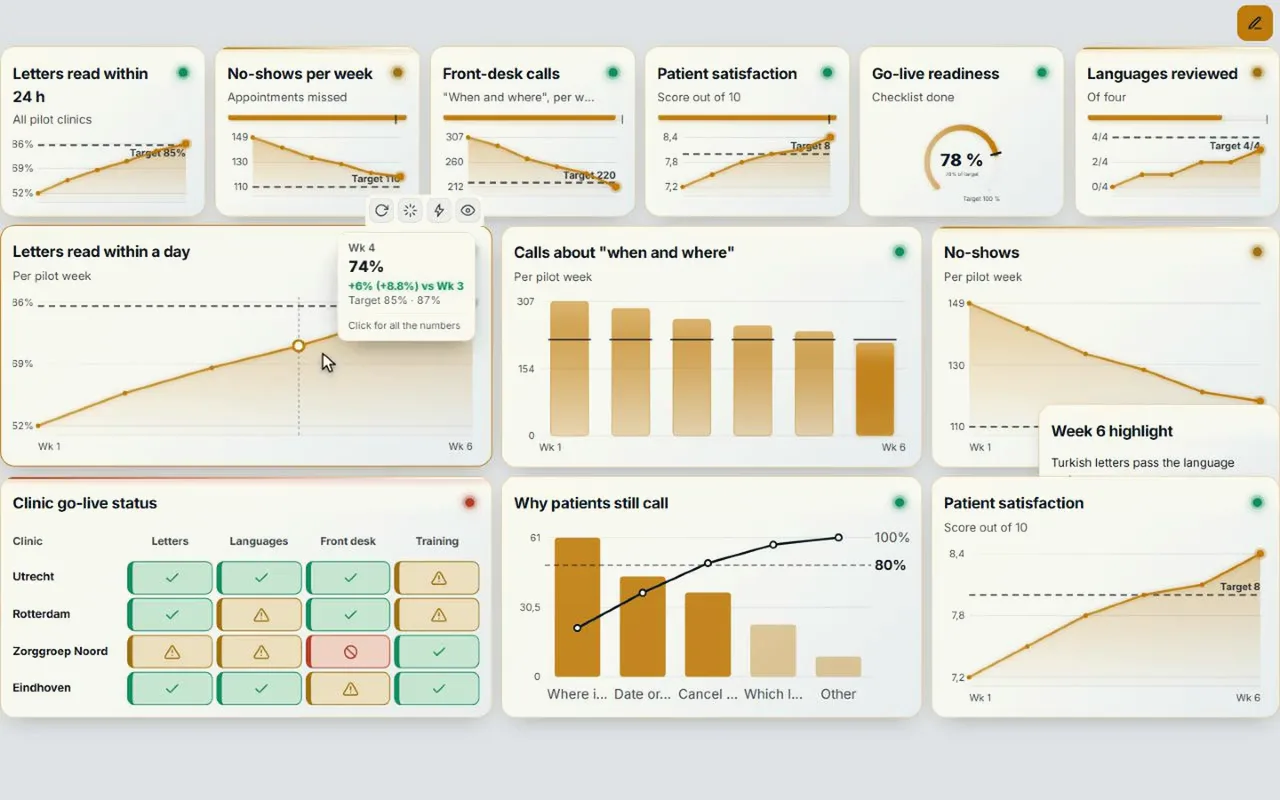
The management decides to leave the CAD software, because it is irreplaceable, and to bundle the rest. The firm tests one project team in a CoVince journey: chat, video calls, documents, the project board with actions and the weekly KPI wall. The designers keep working in their CAD software and put the results in the journey as files. After a quarter the firm has five contracts fewer, one access model and one place where a new colleague finds their project. The CAD link with the rest stays as it was.
A scorecard to choose together
- List all tools your team uses, with contract, owner and number of users.
- Mark each tool: specialist (not replaceable) or generic (chat, documents, boards).
- Count the links between the tools and who maintains them.
- Look at which tools hold sensitive data and with which supplier that sits.
- Bundle the generic tools in a platform, keep the specialist ones, and test with one team.
Do not let one person fill in the scorecard. The administrator knows the contracts, the team leader knows the daily use, and an end user knows which tool they really miss when it is gone. An hour together at a table usually delivers more than a week-long report.
Cost, but also time
Licence costs are visible, the rest is not. Also count the time for administration, onboarding new colleagues, searching between tools and clearing up at departure. A platform does not always save licence money, but it often saves the most in administration and searching. Be careful with heavy promises: an honest comparison also counts the moving costs and the getting used to it, and measures after a quarter instead of predicting.
Common mistakes
The first mistake is choosing on a feature list: a platform with a hundred features is not better than one with the ten your team really uses. The second is wanting to replace everything at once, including the specialist tool. The third is choosing the platform without an exit strategy, so you move the dependence instead of reducing it. The fourth is skipping the end user: if the team does not use it, you only have an extra tool.
When separate tools really are better
Separate tools win when one function is the heart of your work. A design department that sits all day in specialist software, a finance department with an accounting package, a laboratory with measurement software: there you are not looking for a platform, but for the best tool for that work. Also if your organisation has deep, proven integrations that have worked for years, it is wise not to tear them down for a principle. The platform then comes around it, for the collaboration.
Moving dependence or reducing it?
One platform means one supplier to trust. That is not bad, provided you know it and put something against it: agreements on export, a clear notice period and a plan for when things go wrong. The exit strategy is not a sign of distrust, but of mature purchasing. The Data Act (Regulation 2023/2854) also contains rules on switching between data processing services, which strengthens the position of customers.
What you do on Monday
Make the list of tools and fill in the scorecard. Then read how an alternative to Teams and an alternative to Miro work in practice, and look at the demo.
Frequently asked questions
Is one platform always better?
No. It is a trade-off. For the collaboration core it often fits well, for specialist applications not always.
What is the risk of one platform?
Dependence on one supplier. Limit it with an exit strategy and by checking export options.
Can I mix?
Yes. Many organisations keep a few specialist tools and use a platform for the rest.
What does CoVince not replace?
Specialist software. It focuses on collaboration: journeys, chat, video, documents, boards and AI.
What does switching cost?
Mainly time and getting used to it, not only licences. Start with one team and measure after a few weeks what it delivers.
How do I assess chain risks?
Count how many suppliers and integrations you have and who is responsible for them. Fewer links are easier to assess, for example under NIS2.