
NIS2 and your collaboration tools
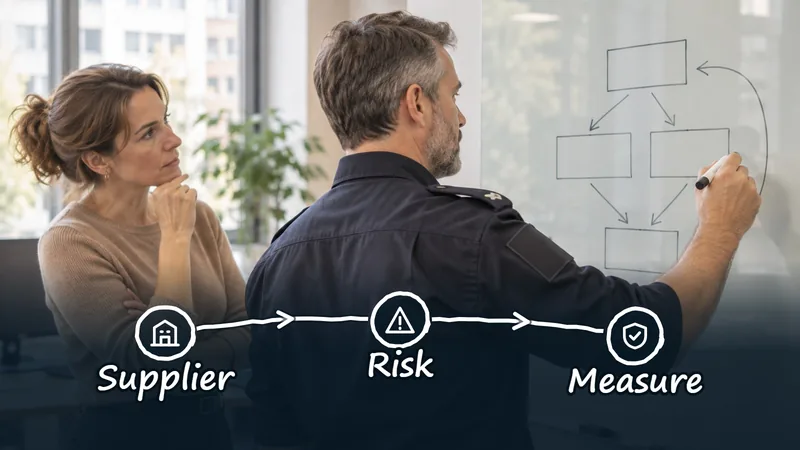
NIS2 is the European directive on network and information security (Directive 2022/2555). It asks important and essential entities to manage cyber risk, including the security of their supply chain. Your collaboration tools are part of it.
What NIS2 is
NIS2 replaces the earlier NIS directive and covers more sectors and organisations, such as energy, transport, healthcare, digital infrastructure and parts of government and manufacturing. Member states transpose it into national law; in the Netherlands that is the Cyberbeveiligingswet. Whether your organisation falls under it depends on sector and size.
The supply chain
Article 21 lists measures for supply chain security and the relationships with direct suppliers. For an organisation that means: know who your suppliers are, which risks they bring, and record agreements. Collaboration tools are not a side issue: they hold board papers, incident communication and often the crisis organisation too.
Questions for your suppliers
- Which security standards does the supplier follow (for example ISO 27001), and can it substantiate that?
- Which sub-processors are used and where does the service run?
- How does the supplier report incidents, and within what period?
- What happens to your data when service stops, and can you take it with you? See exit strategy.
- Which jurisdiction does the supplier fall under? See the CLOUD Act.
Fewer tools, a smaller chain
Every extra tool is an extra link. A platform that brings chat, video, documents, boards and AI together reduces the number of suppliers you must assess. That is an advantage of an integrated platform such as CoVince, provided you ask the questions above there too. CoVince runs in production in Europe and is ISO 27001 certified. No tool makes your organisation NIS2 compliant by itself: that remains your responsibility.
What else article 21 covers
The supply chain is one of the measures in article 21. The directive also names, among others, risk analysis and security policy, incident handling, business continuity and crisis management, security in acquiring and maintaining systems, assessing whether measures work, basic hygiene and training, cryptography, access control and multi-factor authentication. Collaboration tools touch almost all of these: who gets in, what is encrypted, what happens during an outage and how are staff trained?
Incidents and collaboration tools
NIS2 has reporting duties for significant incidents: an early warning within 24 hours, a notification within 72 hours and a final report within a month. At the moment things go wrong, you need a channel that keeps working and was not itself hit by the incident. Think about an alternative communication channel for the crisis team and about who has access to it.
The role of the board
Under NIS2 the management body is responsible for overseeing the measures. That means the choice of tools is not only an IT matter. Record your assessment of suppliers in a form a board member can read: which tools, which risks, which measures, which residual risks.
An example: the regional water supplier
A drinking water company counts as an essential entity. Its crisis organisation works in a chat and video tool from one supplier, and board papers sit in the same environment. During an exercise that environment goes down for an hour. The crisis team cannot reach each other, because the phone list was in that environment too. After the exercise the company decides three things: a second channel outside the main tool, a printed list of emergency contacts and an annual test. It also asks all suppliers of collaboration tools about sub-processors and incident procedure. That turns an abstract duty into a routine.
What evidence you can ask a supplier for
A supplier that takes security seriously can demonstrate it. Think of a certificate such as ISO 27001 with its scope (the scope says which services are covered), a recent independent assessment, a description of the incident procedure and a list of sub-processors with their location. Also ask how the supplier handles vulnerabilities: how quickly are updates rolled out and how are customers informed? An answer in a few clear paragraphs is worth more than a link to a marketing page.
Essential and important entities
The directive distinguishes essential and important entities. Both must take measures and report incidents, but supervision differs: for essential entities it is more active and ex ante, for important ones after the fact. Even if your own organisation is not covered by NIS2, a customer or client may be, and may question you as part of its chain. Then it helps to have the answers ready.
A practical start
- Make a supplier list with the collaboration tools at the top.
- Ask each supplier for its security standards and sub-processors.
- Test once a year whether you can keep working without your main tool.
- Record the outcome in an overview the board can read.
Common mistakes
- Looking only at your own IT and forgetting the suppliers of chat and documents.
- Treating a supplier's certificate as proof that your chain is in order.
- Keeping the crisis channel in the same environment as the systems that can fail.
More on asking the right questions is in the procurement checklist for sovereign software.
Frequently asked questions
Does my organisation fall under NIS2?
That depends on your sector and size. Check with the national supervisor or your lawyer.
Are collaboration tools really part of the supply chain?
Yes. They often process sensitive information and are often the communication channel during an incident.
Does one platform make me NIS2 compliant?
No. A tool can help with a controlled chain, but compliance remains your organisation's responsibility.
What do I ask my supplier first?
Which standards it follows, which sub-processors it uses, how it reports incidents and how you can leave.
Which reporting periods does NIS2 set for an incident?
An early warning within 24 hours, a notification within 72 hours and a final report within a month, for significant incidents.
Who in the organisation is responsible?
The management body oversees the measures. IT and procurement carry them out, but responsibility sits higher.