
Digital sovereignty for municipalities and government
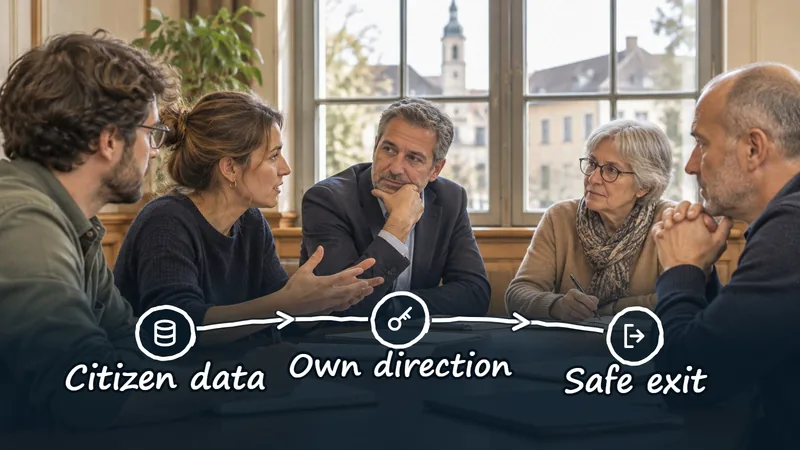
Digital sovereignty for municipalities and government is about control over data and suppliers. Municipalities and other public bodies work with administrative documents, residents' personal data and crisis communication. Digital sovereignty meets NIS2, procurement policy and the wish not to depend on a single foreign supplier.
Why it weighs heavier for government
- Administrative documents and residents' data deserve careful handling.
- Continuity: in a crisis communication must keep working.
- Public accountability: a municipality must be able to explain why it chose a supplier.
- Regulation: NIS2 (Directive 2022/2555) affects many public bodies; in the Netherlands it is being transposed into the Cyberbeveiligingswet.
Procurement and dependency
In procurement you can include sovereignty as a requirement or wish: legal seat, sub-processors, export options, AI models. Use the procurement checklist for it. Record the exit, see exit strategy. What sovereignty does and does not mean is in what is digital sovereignty.
Collaborating and steering live
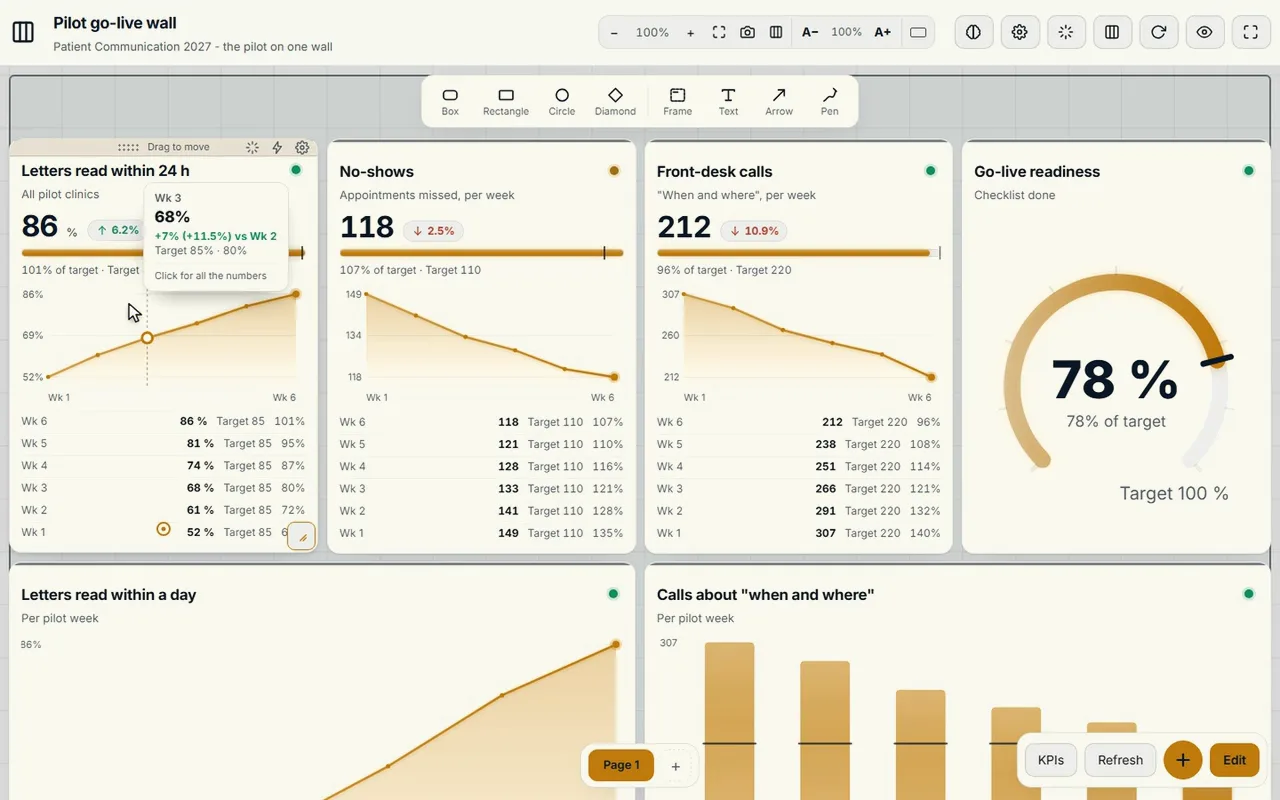
For municipalities not only chat and documents are relevant, but also steering on progress: a digital Obeya with KPIs, actions and a timeline for a programme, a crisis team or a large challenge. CoVince combines that with journeys, chat, video calls and an AI CrewMate. Access is managed per organisation and journey.
Where CoVince runs
CoVince runs in Europe, with a European cloud provider and not a US hyperscaler. CoVince is ISO 27001 certified. For a public procurement that is the kind of fact that belongs in your assessment, next to the questions in the checklist. It does not replace your own assessment: the municipality remains responsible for its data, and a platform does not make you compliant by itself. If you want a European AI model for the CrewMate, the admin chooses it in the model picker.
An example: the municipality of Waterhoek
Imagine a fictional municipality with 40,000 residents that starts a programme "Energy-efficient Waterhoek". The programme team consists of nine civil servants, an alderman and two external advisers. So far collaboration ran through loose email attachments and a US file service. In a journey there are now a board with actions and owners, a KPI page with progress per district, a document with the approach and a chat. The external advisers get access to that journey only, and when their assignment ends the access is withdrawn. Residents' personal data stays in the municipality's case systems. The procurement officer uses the checklist and records the assessment for the executive board. After six months the municipality decides whether a second programme follows.
A first step
Start with a programme or project team without special categories of personal data, and evaluate.
A step plan for a municipality
- Inventory which collaboration tools departments use, including the tools bought "just for now".
- Classify the data: public, internal, confidential, special.
- Choose a pilot with internal or public material, such as a programme team.
- Test the supplier with the procurement checklist.
- Decide after the pilot and record the decision and the assessment for the council or executive.
Prepared for a crisis
Decide where your crisis team collaborates, and test once whether that works when your main environment is unreachable. A simple alternative route, for example a second platform for the crisis team, is often already a big step.
Common mistakes
The first mistake is putting sovereignty in a tender as a loose requirement without saying what you test it with. Ask for concrete things: legal seat, sub-processors, export. The second is a pilot without an end date and without a decision, so that "just trying" becomes a lasting dependency. The third is forgetting that a European supplier needs an exit too: record export and termination, even when you are satisfied.
Practise continuity
A crisis plan that has never been practised is an assumption. Once a year let the crisis team work for an hour in the alternative environment, with real roles and a fictional scenario, such as an outage or a flooded district. Note what went wrong: who had no access, which document was missing, who did not know where to look. That yields more than a thick plan, and it shows that dependency on a single supplier has deliberately been limited.
Checklist for the administrative organisation
- Is there a list of all collaboration tools and who manages them?
- Is data classified and is it recorded what may go in which tool?
- Is there a data processing agreement and a list of sub-processors?
- Is there a tested alternative route for the crisis team?
- Are the procurement decision and the assessment recorded for public accountability?
What you show the council or executive
A decision about a collaboration platform is stronger if it can be followed on one page: which questions were asked, which answers were received, which evidence was viewed and which risks remain. Also record the trade-off you did not make, for example "special categories of personal data stay outside the platform". That way the council can see later that the choice was deliberate, and not taken for granted.
What you do on Monday
- Ask three departments which collaboration tools they use and who manages the contracts.
- Pick one programme team with public or internal material as a pilot.
- Have the procurement officer fill in the checklist for the current and the new supplier.
- Schedule the evaluation and the decision moment in the executive's agenda in advance.
Frequently asked questions
Why is digital sovereignty important for government?
Because of administrative data, residents' data, continuity in crises and public accountability for supplier choices.
Does NIS2 affect municipalities?
NIS2 affects many public bodies; in the Netherlands it is being transposed into the Cyberbeveiligingswet. Check what applies to your organisation.
What can I require in procurement?
Legal seat, sub-processors, hosting location, export options and AI models, see the procurement checklist.
Where does CoVince run?
In Europe, with a European cloud provider and not a US hyperscaler. CoVince is ISO 27001 certified.
Does CoVince make my municipality NIS2 compliant?
No. A platform can help, but the municipality remains responsible for its own risk management, measures and reporting duties.
Can external advisers get limited access?
Yes. Access is managed per organisation and journey, so an external party only sees what it comes for.