
The CLOUD Act explained
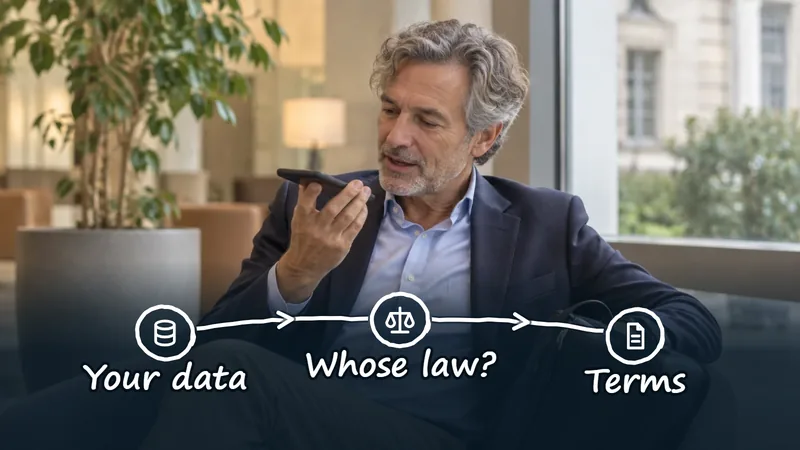
The CLOUD Act is a US law from 2018. It says that US authorities can require US providers to hand over data they control, even when that data is stored outside the US, for example in a data centre in Europe.
What the law does
CLOUD stands for Clarifying Lawful Overseas Use of Data. The law clarifies that a provider subject to US jurisdiction can be required to produce data in its "possession, custody, or control". The physical location of the server is not decisive.
The law also provides for so-called executive agreements between the US and other countries, and for ways for a provider to object when a demand conflicts with foreign law. In practice it remains a legal tension with European data protection law.
Who is affected
It concerns providers that fall under US jurisdiction. That includes companies headquartered in the US, but also companies with a strong US link. Whether a specific supplier falls under it depends on its structure. Ask explicitly and have it written into your data processing agreement.
Important: what matters is the legal seat of the party that controls the data, not the nationality of your account manager and not the location of the server.
What to do about it
- Map which suppliers fall under US jurisdiction, also as sub-processors in the chain.
- Judge per kind of data whether that is acceptable. For public information often yes, for personal, medical or governmental data much less so.
- Look at encryption with keys under your own control, and at European alternatives for the sensitive parts.
- Record the assessment. It helps with the GDPR, with NIS2 and with audits.
Why an EU region is not enough
Many US suppliers offer storage in a European region. That helps with latency and with some rules, but it does not change the provider's legal seat. Read more in data residency is not sovereignty.
Common misunderstandings
- "If the server is in the Netherlands, the law does not apply." The law looks at who controls the data, not at the location of the server.
- "Only suspects are affected." The law is about the powers of authorities towards the provider. A customer does not always notice anything.
- "This only matters for big companies." Every provider under US jurisdiction in principle falls under the regime, smaller ones too.
What you can put in the contract
Ask in the data processing agreement for a duty to notify you of demands (as far as the law allows), for the provider's effort to object, and for a list of sub-processors. A supplier that is open about this gives you more to hold on to than one that only points at its EU region.
An example: the care provider
A care provider with four hundred employees uses a European software package for client records. The supplier is in the Netherlands, and so is the data centre. Yet on asking, the hosting layer turns out to run on the cloud of a US company, and a support team there has administrative rights. The care provider asks three questions: who legally operates the infrastructure, who holds administrative rights and from which country, and who manages the keys? The answer decides whether the provider is willing to carry this risk for client data. That is exactly the kind of assessment the situation calls for: not "is it allowed", but "can we explain why we set it up this way".
Checklist for your supplier conversation
- What is the legal seat of the supplier and of its parent company?
- Which infrastructure provider does the service run on, and who operates it?
- Who manages the encryption keys, and where?
- Does the supplier notify customers of demands, as far as the law allows?
- Is there a current list of sub-processors, with a duty to notify changes?
What you can do on Monday
Take your supplier list and add which parties fall under US jurisdiction, including through their infrastructure. Mark the tools with personal data or board papers. Discuss the marked list with your data protection officer and decide where a European alternative or an extra measure is needed first.
How a demand works in practice
A US authority addresses a demand to the provider, not to you as the customer. The provider checks whether it is competent and whether the demand conflicts with the law of the country where the data sits. Sometimes it can object, sometimes not, and it may not always inform you. That is why it makes sense to agree beforehand what the provider does: involve its legal department, limit the scope of the demand and notify you as far as that is permitted. Such an agreement does not protect you from the law, but it does give you a starting point and a contact.
What CoVince says about this
CoVince is a European platform: production runs in Europe, with a European cloud provider, and CoVince is ISO 27001 certified. That reduces the number of links under US jurisdiction, but it does not take away your own responsibility: a platform does not make an organisation compliant by itself. See also Schrems II and the GDPR.
Frequently asked questions
Does the CLOUD Act also apply to data in a European data centre?
Yes, if the provider falls under US jurisdiction. The law looks at who controls the data, not where the server stands.
Is the CLOUD Act the same as the Patriot Act?
No. They are separate laws. The 2018 CLOUD Act is specifically about access to data stored outside the US.
Does encryption help?
It can, especially when the keys stay under your control. It depends on how and by whom the keys are managed.
What does CoVince do about this?
CoVince is a European platform that runs in production in Europe and is ISO 27001 certified. You remain responsible for your own assessment.
Must I cancel a US supplier right away?
No. Judge per kind of data whether the risk is acceptable and start with an alternative for the sensitive parts.
What do I ask the supplier first?
About its legal seat, its infrastructure provider, who manages the keys and whether it notifies demands as far as the law allows.