
GDPR-proof collaboration in healthcare
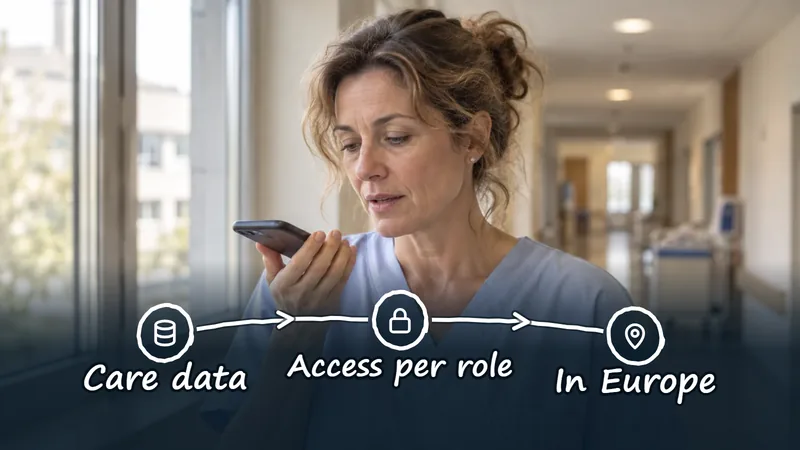
GDPR-proof collaboration in healthcare starts with deliberately deciding which data goes into which tool. In healthcare, health data, a special category of personal data, plays a role in much collaboration. You choose a supplier that can substantiate its security and record agreements. NEN 7510 is the usual standard in the Netherlands.
What is at stake in healthcare
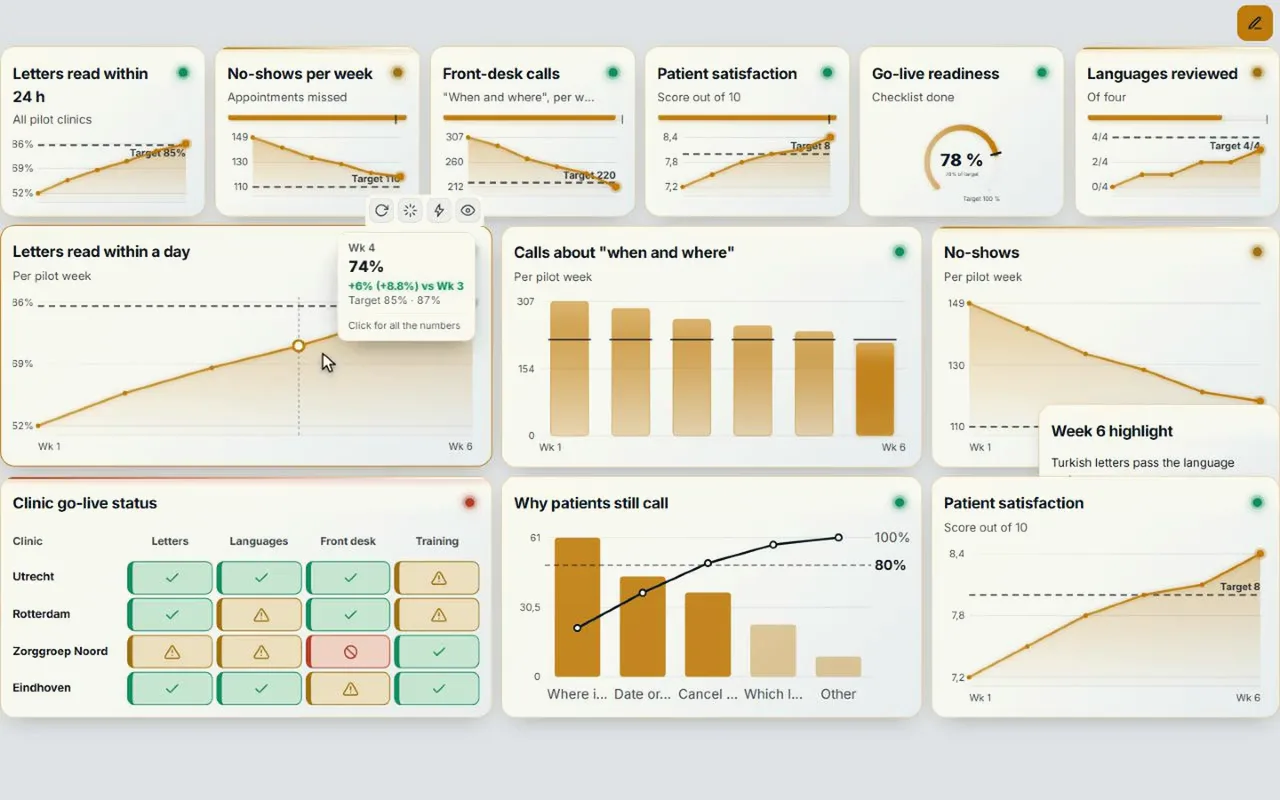
Healthcare organisations work with patient data, but also with reports, quality figures and team meetings. Much collaboration can happen without traceable patient data: a dashboard with quality figures per ward, an action list for an improvement project, a handover at process level. Separating that already helps a lot.
What to arrange
- Data minimisation: do not put traceable patient data in chat, boards or AI if it is not needed.
- Data processing agreement: record with your supplier what it processes, where and with which sub-processors (GDPR article 28).
- Access: decide per department or project who sees what. In CoVince you set that per organisation and journey.
- AI: choose deliberately which model processes which text; for very sensitive text a local model may fit, and you can also choose a European model.
- Transfers: assess transfers outside the EU, see Schrems II.
Where CoVince runs and what is demonstrated
CoVince runs in Europe, with a European cloud provider and not a US hyperscaler. CoVince is ISO 27001 certified. That is a standard for information security in general; it is not the same as a healthcare-specific standard, and it does not relieve your organisation of its own responsibility. Always ask a supplier what it can show, and record it.
NEN 7510
NEN 7510 is the Dutch standard for information security in healthcare. CoVince is working on a NEN 7510 route. It is in preparation: we claim no certification here. Involve your own information security officer in the assessment.
An example: care group De Kleine Beek
Imagine a fictional care group with five locations that wants to steer the improvement programme "fewer falls" together. The programme team consists of a quality officer, three team managers and a physician. The journey gets a board with the action list, a dashboard with the number of incidents per location, a document with the approach and a chat. What does not go in: names of residents, file numbers or photos of injuries. For an incident only an anonymous number is recorded, the file stays in the care group's own care system. The team writes half a page of examples, "this we do put on the board, this never", and pins it in the journey. After three months the care group evaluates whether the minutes of the client council can also get a place.
How to start small
Start with an application without traceable patient data, for example a board with quality indicators or the action list of an improvement project. See also the page on Obeya in healthcare. If it works well, you can assess whether to move more.
Checklist for your healthcare organisation
- Is it recorded which data may go into the collaboration tool and which may not?
- Is there a data processing agreement with a list of sub-processors?
- Is access set up per team or project and is it checked?
- Is it fixed which AI model is used for which task?
- Do you know who does what in a data breach, and within which period?
- Has your data protection officer seen the assessment?
Common mistakes
The first mistake is using a chat group for convenience to hand over patient information. The second is relying on a supplier's certificate without assessing for yourself what you process: a certificate covers the supplier, not your use. The third is having no agreement on AI: an employee pasting a patient story into any chatbot is the biggest risk, not the platform. Keep the rules small, concrete and easy to find. Finally: a platform does not make you compliant by itself, the responsibility stays with your organisation. Also read the procurement checklist for the questions to your supplier and the main page for what CoVince offers.
This article is general information, not legal or medical advice.
What does and does not belong in a collaboration tool
| Usually fine | Extra care |
|---|---|
| Quality indicators per ward | Traceable patient data |
| Action list of an improvement project | Medical images or results |
| Team-level scheduling agreements | Personal files of staff |
| Meeting agendas and decisions | Complaints with names |
Make it concrete for your team
Write half a page with examples everyone recognises: this we do put on the board, this never. Pin that page in the journey. People follow an example faster than a policy text.
What you do on Monday
- Pick one improvement project without traceable patient data as the first application.
- Ask your information security officer and data protection officer to read along.
- Write the half page of examples and set access per team.
- Plan an evaluation after three months, and decide then whether to expand.
AI in healthcare: small, clear rules
Agree that staff do not put traceable patient data in a prompt, not even "just to test". Let the CrewMate work with anonymised summaries, process descriptions and quality figures. Always check what an AI answer says before it ends up in a decision or a file: a model can sound convincing and still be wrong. Record who reviews the result.
Frequently asked questions
May I put patient data in CoVince?
That is your assessment as controller, with a data processing agreement. Much collaboration can happen without traceable patient data.
Is CoVince NEN 7510 certified?
No. A NEN 7510 route is in preparation; we claim no certification. CoVince is ISO 27001 certified.
Where does CoVince run?
In Europe, with a European cloud provider and not a US hyperscaler.
Where do I start?
With an application without traceable patient data, such as a board with quality indicators.
Can AI be used safely?
That depends on the model and the text. Choose deliberately, consider a European model and, for very sensitive text, a local model.
Is an ISO 27001 certificate enough for healthcare?
No. It shows that the supplier manages its information security, but your organisation remains responsible for what it processes and for healthcare-specific requirements.