
GDPR-proof collaboration in education
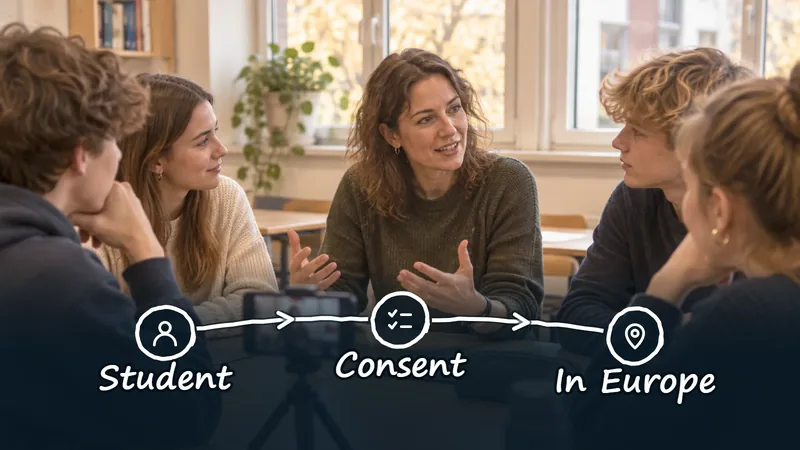
GDPR-proof collaboration in education means knowing which tools process which data, recording agreements with suppliers and handling AI deliberately. Schools and institutions process data about pupils, often minors, and use many online tools. A European collaboration platform can shorten the chain.
The landscape
Education organisations use chat, documents, video and increasingly AI. Often that comes from a handful of US platforms. That raises questions about transfers, see Schrems II, and about what happens with data of minors.
What to arrange
- Inventory: which tools do teachers and teams use, and which data goes in?
- Data processing agreements with all suppliers, including sub-processors (GDPR article 28).
- Access per class, team or project: only those who belong see it. In CoVince you set that per organisation and journey.
- AI agreements: which model, for which tasks, and what teachers do not enter (such as traceable pupil data).
- Transparency: explain to pupils and parents where AI is used, see AI Act article 50.
What CoVince offers
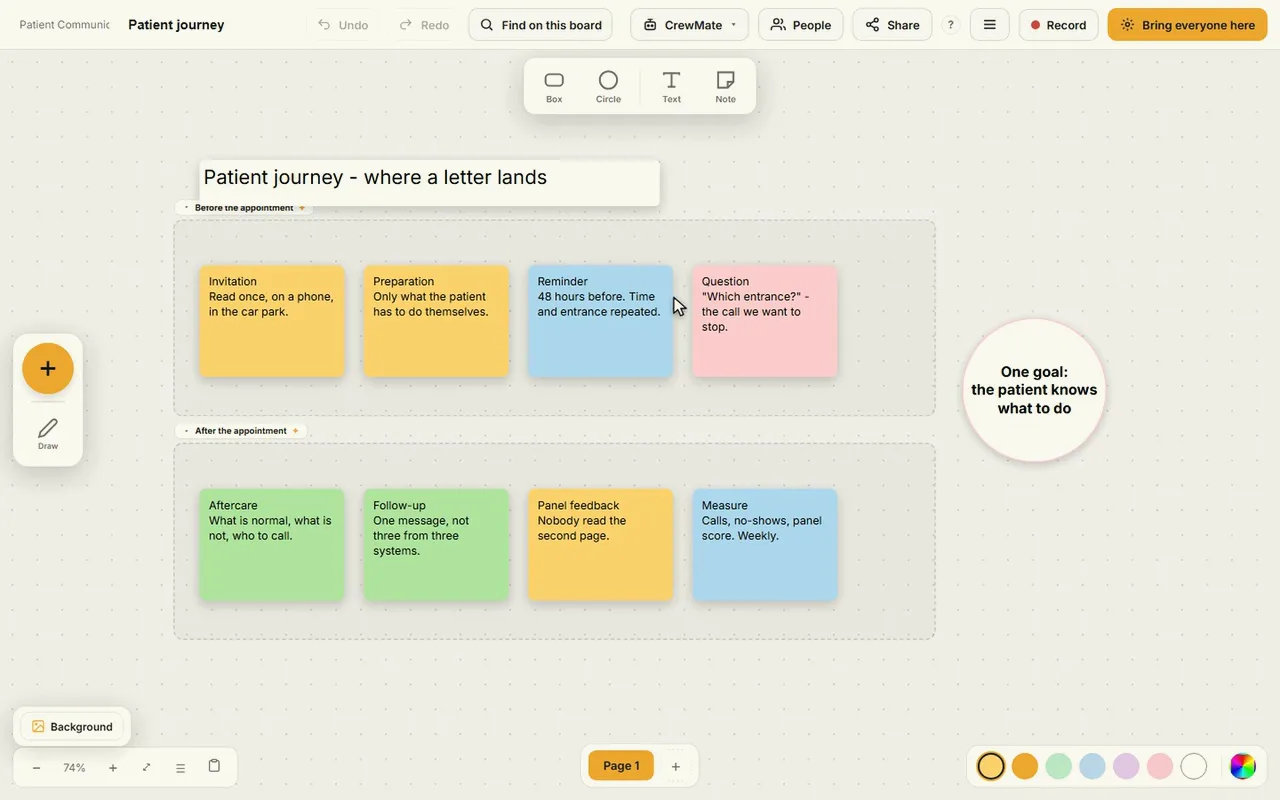
- A journey per team, subject or project, with chat, documents, slides and a board.
- Own editors for documents, spreadsheets and presentations, so no external Office suite in the chain.
- A CrewMate whose model an admin chooses, including a European model from Mistral AI or Scaleway, or a local model.
The page on Obeya in education shows how schools use the board for teamwork. Also look at the alternative to Google Workspace.
Where CoVince runs
CoVince runs in Europe, with a European cloud provider and not a US hyperscaler. CoVince is ISO 27001 certified. That does not replace your own assessment: a school remains responsible for which data it processes and why. It does make your assessment clearer, because the chain is shorter and you have fewer separate suppliers to test.
An example: a vocational programme in care and welfare
Imagine a fictional vocational programme with twelve teachers and 400 students that currently uses separate tools for chat, documents and project planning, partly from a US supplier. The team decides not to move everything at once. First the teaching team starts working in a journey: lesson planning, agreements on assessment and a board with improvement actions. No student data goes in. After a semester the team looks at what went well, and only then follows a pilot with one student project, with a short explanation to the students and their parents (for minors) about what is used and why. For AI one rule applies: no traceable student data in a prompt. The admin chooses a European model for the CrewMate for team tasks.
How to start small
Start with a team of teachers or a curriculum development project, without pupil data. Evaluate after a period and decide whether pupil projects follow.
Checklist for your school or institution
- Is there a current list of tools, with which data they hold?
- Does every supplier have a data processing agreement?
- Is access set per class, team or project, also for temporary guests?
- Are there school-wide agreements on AI for teachers and pupils?
- Have pupils and parents been informed?
- Do you know who does what in a data breach?
Common mistakes
The first mistake is that every teacher picks their own tool, so nobody has the overview. The second is putting pupil data in a free tool because it is "just for now". The third is no agreement on AI: a teacher pasting a pupil report into a chatbot shares data of a minor with a provider. A platform does not make you compliant by itself; the agreements and the care remain the school's. See also the procurement checklist for questions to suppliers, and the main page for what CoVince offers. This article is general information, not legal advice.
Roles and permissions
A school has teachers, teams, a leadership group and sometimes external partners. Decide per role what they may see and change, and check that a few times a year. A temporary guest, such as an intern or an external adviser, gets access only to the journey they come for.
When pupils take part
- Limit the data to what the assignment needs.
- Inform pupils and parents where and why a tool is used.
- Choose the least intrusive setting for minors and explain which AI help is or is not used.
What you do on Monday
- Ask each team which tools they use and put them in one list.
- Pick one teaching team as the first pilot, without pupil data.
- Write one page of AI rules for teachers and discuss it in the team.
- Plan an evaluation after the semester and decide on pupil projects.
AI for teachers: what works
Much AI help touches no pupil data: having a lesson outline proposed, rewriting a text to a given level, drafting a rubric or putting an assignment in simpler language. Those are good starting points. Agree that a teacher always checks what the model writes, and that results about pupils are not judged by AI without human review.
Frequently asked questions
May a school use US tools?
It can, with an assessment of transfers and a data processing agreement. It remains a trade-off per tool and per kind of data.
What does a teacher not put in AI?
Traceable pupil data. Make school-wide agreements about it.
What does CoVince offer education teams?
Journeys with chat, documents, slides, boards and an AI CrewMate whose model an admin chooses, including a European or local model.
Where does CoVince run?
In Europe, with a European cloud provider and not a US hyperscaler. CoVince is ISO 27001 certified.
Do parents have to be informed?
For minors it is wise and often necessary to explain to pupils and parents which tools and AI are used and why. Agree the form with your data protection officer.
Does ISO 27001 make me GDPR-proof?
No. It shows that the supplier manages its information security. What a school processes and how it arranges that remains its responsibility.